
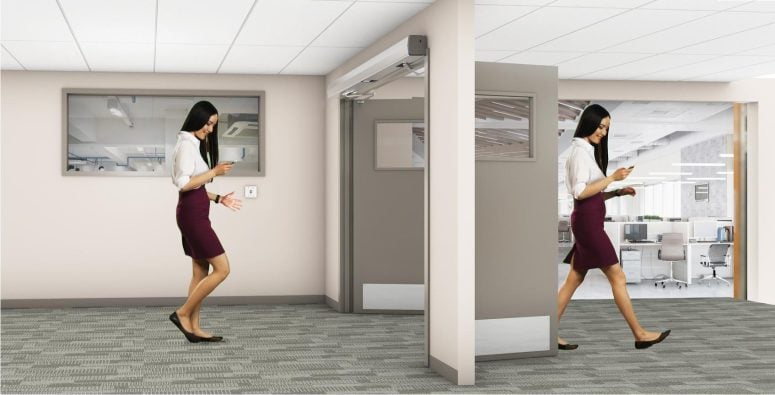
As the world continues to adapt to the new reality brought about by the COVID-19 pandemic, the need for touchless technology has become more pronounced than ever. Touchless door hardware, in particular, has emerged as a critical component in reducing the spread of germs in public spaces.
From airports to office buildings, touchless door hardware is becoming the go-to solution for businesses and organizations looking to keep their customers and employees safe.
In this blog post, we’ll explore what touchless door hardware is, how it works, and its benefits. We’ll also take a closer look at the different types of hands-free access solutions available on the market today and their applications in various settings.
Contents
What is Touchless Door Hardware?
Touchless door hardware is a type of door system that operates without the need for physical contact. Instead of using traditional door handles, push bars, or buttons, touchless door hardware uses sensors to detect the presence of a person and trigger an action.
Touchless door hardware is different from traditional door hardware in that it eliminates the need for physical contact with the door handle or push bar. This makes it a much more hygienic option, particularly in public spaces where large numbers of people may be passing through the same door.
At qualifiedhardware.com, we understand the importance of touchless access, particularly in the current context. That’s why we have an inventory of touchless door hardware products, including sensors, control units, and door motors, from leading manufacturers in the industry.
Types of Touchless Door Hardware
There are several types of touchless door hardware available on the market today, each with its own unique features and benefits. Qualified Hardware offers a wide range of products from leading manufacturers in the industry. Here are some of the different types of touchless door hardware you can find on our website:
Touchless Sensors
These sensors are the core component of touchless door hardware systems. They can use different technologies to detect the presence of a person, such as infrared, motion, or capacitive sensing.
Automatic Door Openers
These devices use a motor to automatically open and close the door, triggered by the touchless sensor. They are ideal for areas where people may have difficulty opening the door, such as hospitals or assisted living facilities. Automatic door openers can be installed on various types of doors, including swing doors, sliding doors, and revolving doors.
Touchless Exit Devices
These devices are designed to be installed on the inside of a door, allowing people to exit without the need for physical contact with the door handle or push bar.
Touchless Switches
These switches are designed to replace traditional light switches or push buttons, allowing people to activate the door or other devices with a touchless gesture. Norton 700-Dopple, a popular touchless wall switch, is available at Qualified Hardware.
Sanitary Door Handles
Sanitary door handles are designed to be used with touchless door hardware systems, providing a hygienic option for people who prefer to use a physical handle. They are commonly made from materials that have antimicrobial properties, such as stainless steel or copper. Sanitary door handles are ideal for hospitals, clinics, and other healthcare facilities.
How Does Touchless Door Hardware Work?
Touchless door hardware works by using sensors to detect the presence of a person and trigger an action, such as opening or closing a door. The exact process may vary depending on the type of sensor and hardware used, but in general, the following steps are involved:
- Sensor detection: When a person approaches a touchless door, the sensor detects their presence through various means, such as detecting movement, body heat, or the presence of a nearby object.
- Signal processing: The sensor sends a signal to a control unit, which processes the information and determines whether to activate the door motor to open or close the door.
- Door motor activation: If the control unit determines that the door should be opened, it activates the door motor, which moves the door to the open position. If the door needs to be closed, the motor moves the door to the closed position.
- Delayed closing: In some touchless door hardware systems, the door may be set to remain open for a certain period before automatically closing. This delay can be adjusted to suit the specific requirements of the environment.
The sensors used can vary depending on the specific needs of the environment. For example, motion sensors may be used in areas with high foot traffic, while infrared sensors may be more suitable for areas with low foot traffic or where hygiene is particularly important.
Can you Incorporate Touchless Door Hardware into an Existing Door System?
Yes, it is possible to incorporate touchless door hardware into an existing door system. Depending on the type of touchless hardware you choose, you may need to install additional components or retrofit your existing door to accommodate the new hardware.
For example, if you choose a touchless door opener, you will need to install the opener mechanism and power supply. This may require additional wiring and drilling to install the mechanism onto the door frame. However, in many cases, hands-free door openers can be installed without the need for major structural changes.
Importance of Incorporating Hands-Free Door Hardware
Touchless door hardware offers several benefits over traditional door hardware, particularly in the current context of increased emphasis on hygiene and safety. Here are some of the key benefits of using hands-free door hardware:
- Eliminates the need for physical contact with the door handle or push bar, reducing the risk of transmission of germs and viruses. This is particularly important in high-traffic areas such as hospitals, schools, and office buildings.
- Makes it easier for people with disabilities or mobility issues to enter and exit buildings without the need for physical contact with the door handle or push bar. This can improve accessibility and reduce barriers for people with disabilities.
- Improve safety by reducing the risk of injuries caused by door-related accidents, such as pinched fingers or tripping over door thresholds. Automatic door openers can also improve safety by ensuring that doors close properly and securely, reducing the risk of break-ins and other security breaches.
- Help improve energy efficiency by reducing the amount of air exchange between indoor and outdoor environments, particularly in areas with extreme temperatures. This can lead to lower heating and cooling costs and improved energy efficiency.
- Adds a modern and stylish addition to any building, providing a sleek and futuristic look that is sure to impress visitors and clients. Additionally, touchless door hardware is low maintenance and durable, making it a cost-effective solution in the long run.
Where Do You Use Touchless Door Hardware?
Touchless door hardware is versatile and can be applied in a variety of settings, from public buildings to private residences. Here are some of the key applications of touchless door hardware:
- Healthcare Facilities: Touchless door hardware is particularly important in healthcare facilities, where hygiene is paramount. It can help reduce the risk of infection transmission between patients and healthcare workers, improving overall hygiene and safety in the facility.
- Education Facilities: Schools and universities are high-traffic areas where many people come into contact with door handles and push bars. Touchless door hardware can help reduce the risk of transmission of germs and viruses, making these facilities safer for students and staff.
- Commercial Buildings: Touchless door hardware is a valuable addition to commercial buildings, where many people come and go throughout the day. It can improve the overall hygiene of the building, reduce the risk of injuries, and enhance energy efficiency.
- Government Buildings: Hands-Free door hardware can be particularly beneficial in government buildings, where security is a top priority. Automatic door openers can help ensure that doors are properly secured, reducing the risk of security breaches.
- Residential Buildings: Touchless door hardware can also be applied in residential buildings, improving accessibility and safety for people with disabilities or mobility issues. It can also provide a modern and stylish look to any home.
Overall, touchless door hardware is an investment in safety, hygiene, and convenience that is likely to become increasingly important in the post-pandemic world. By upgrading to hands-free door control solutions, businesses, organizations, and individuals can enjoy a safer, more accessible, and more efficient way of opening and closing doors.
QualifiedHardware.com offers a wide range of touchless door hardware options, including automatic door openers, touchless exit devices, and hands-free push plates, making it easy for businesses and individuals to find the right hardware for their needs. Contact us today to get the conversation started.


